
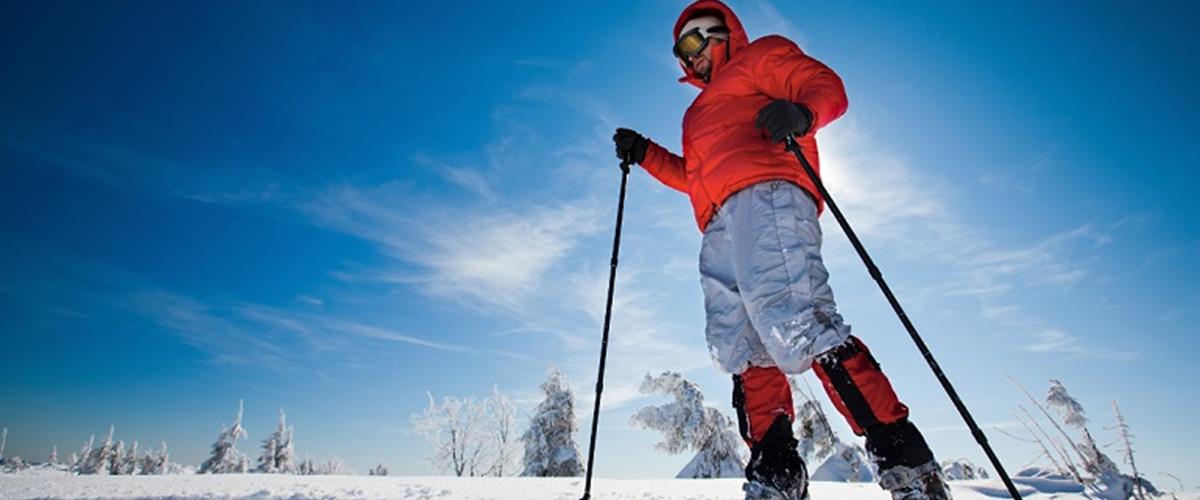
How to choose the right walking poles? The question may seem simple, but it is not always easy to know where to start. As with any hiking equipment, there is currently an impressive number of trekking pole models on the market, available in a wide range of prices. To better guide you in your purchase, here are the elements to consider when trying to make the best choice.
Prices vary enormously from one model to another. Generally speaking, the lighter the pole, the more expensive it will be. The quality of its various components also has a direct influence on the price. Considering that walking poles have a long lifetime, the cost of high-quality equipment is an important factor to consider because you will have it for a long time.
The cumbersomeness mainly depends on the number of sections and the poles' storage system. The more sections poles have, the easier they are to store and less cumbersome they are. Different systems are available to reduce their storage volume.
Walking poles are usually composed of several sections. Most have two or three, but some have four. Poles composed of two or three sections are designed to be carried on a backpack when they are not used. Four-section poles, on the other hand, can be carried inside a backpack.
Single-section poles are called walking staff and are most commonly used for Nordic walking, a fast-pace walking using poles equipped with wrist straps and specialized tips. Because of their length, they cannot be stored on the backpack when they are not used or when we need to free our hands for something else. Hiking or walking staffs are not suitable for treks. Choose foldable/collapsible walking poles.
The storage system reduces the space used by the poles to a minimum. These different storage systems, also called folding systems, come in handy when the poles aren't used. Walking poles composed of two, three or four sections necessarily have a locking mechanism to secure them at the right height, once adjusted. There are three main locking mechanisms: twist, clamp or Z-fold.
The twisting system allows to adjust the length of the poles by sliding the sections and screwing them together. Graduation marks on the poles help to adjust the length. To store the pole, simply unscrew the sections, slide them into one other and screw them again. Because it is simple and easy to use, it is the most common system. The disadvantage of this system is that the length of the poles sometimes decreases during walking. It can progressively or suddenly change length. The screw system is mostly recommended for one-day treks on easy trails with a lightweight backpack, or for occasional use.
With the clamp system, the sections can slide to the desired length and simply clamped into place. To store the poles, you must loosen the clamp-like mechanism, slide the sections one into the other and lock them into place. This system is practical, quick and durable. It is, however, more expensive than twist systems. It is recommended for people who regularly go on treks on difficult and uneven trails or on steep slopes with a heavy bag. In short, in conditions where walkers strongly lean on their poles.
With the Z-fold system, a reinforced rope or elastic thread is placed inside the pole sections to hold them together. To assemble the poles, simply unfold the sections and slide the top section out of the handle until the locking button locks. The sections will fit one into the other. To store them, unlock the system by pressing the button, push the first section into the handle, then separate and fold the remaining sections. This system is very precise, and the settings remain fixed. It's the lightest option with the quickest set up. On the downside, pole size is not adjustable. There exist hybrid versions combining foldable and clamp-like systems, which allow to adjust pole length. This type of trekking pole is an excellent option for trekkers seeking lightness and who generally walk on flat terrain without much elevation.
To make an optimal use of your walking poles, their length must be adjusted so that your elbows form a 90° angle. Forearms should be horizontal when holding the pole and the tip touches the ground. It is important to adjust the length of the poles according to the walker's height and the terrain profile.
The use of telescopic walking poles with two or three easily adjustable sections is highly recommended. Poles with clamp-like or screw storage systems have a unique length and the advantage of being adaptable to the terrain. Adjustable in height, they can be shortened when going uphill and lengthened when going downhill. Versatile, they are perfectly adapted to hiking and snowshoeing.
Selecting the appropriate size is mostly important with Z-fold poles since they are not adjustable. They are available in several sizes, hence the importance of making the right choice. You should choose a smaller pole when going uphill and a longer one when going downhill. The ideal pole length varies depending on the type of terrain.
Walking with light poles is much more pleasant and less tiring. Whether they are in your hands or on your backpack, the lighter they are, the better.
Trekking pole shafts are generally made of two materials: aluminum and carbon. Both materials are very light and their impact on the pole's weight is minimal. The difference in weight is mostly due to the storage system used, the material used for the handle and the shock-absorbing system.
Most poles are made of an aluminum alloy. There are different types and some are lighter than others. 100% aluminum poles are slightly more solid, but also heavier. The advantage of an aluminum pole is that it can bend and rarely breaks. On the other hand, aluminum does not adequately absorb the impact caused by the contact of the tip with the ground. Aluminum alloy is a good compromise between price, strength, resistance and lightness. It has a good value for money.
Walking poles can also be made of carbon fibre, present in various fractions. The higher the amount of carbon in the pole, the more expensive it is. 100% carbon poles are extremely light, stiff and absorb vibrations to a higher degree. They are nonetheless relatively fragile, especially in cold weather and have a tendency to break more easily than aluminum poles. Generally, they break suddenly, and the broken section becomes as sharp as a razor blade.
Since they are the point of contact between your hands and the poles, good handles allow you to make the most of the advantages of walking with poles. The more we use poles for long or intense treks on uneven terrain or in steep slopes and with a heavy backpack, the more comfortable the handles must be, allowing a good grip. Since you will often—if not always—have them in your hands, the handles must not be slippery or create any friction, which could quickly cause blisters.
The ergonomics of the handle must be perfectly suited to the walker's hand. There are models for left and right hands and some handles come in an angle, allowing the arms' natural oscillatory movement to take place. A sleeve is also present on certain handles. This extension allows you to use the poles while going uphill or on sloping terrain without having to change the length.
The handles can be made of four different materials: plastic, rubber, foam and cork.
Plastic handles are durable and inexpensive. They are, however, less comfortable and may cause perspiration. Rubber handles are durable, affordable and a little bit more comfortable than plastic ones. As with plastic, rubber also causes perspiration.
Both rubber and plastic adapt to the ambient temperature, which can be quite uncomfortable, especially in cold weather. Because these handles lead to sweating, the hand could slip, causing friction and even blisters. They are mostly recommended for occasional walkers that use easy trails and who are looking for more affordable poles.
Foam handles have many advantages. They offer optimal comfort, are light and soft to the touch. They also absorb moisture from sweaty hands, which prevents hands from slipping. They dry quickly when wet and do not conduct heat or cold. On the other hand, they are less resistant and relatively expensive.
Cork handles provide optimal adherence. They are comfortable, they resist moisture from sweaty hands and are relatively resistant. But just like foam handles, they are quite expensive.
Foam or cork handles are highly recommended for intense use and in harder and more strenuous trails. The walker can choose either material based on their preference.
Wrist straps are straps that are attached to the pole and wrapped around our wrists. Similarly to handles, high quality wrist straps allow you to optimize the use of your walking poles. They're not only useful to prevent you from dropping your poles!
They stabilize the pole in your hand and reduce friction, hence also reducing blisters. They support the wrists throughout the walk, thereby relieving the hands and forearms. They also play an important role in transferring the weight to the poles, reducing the need to firmly grab the handles. Wrist straps reduce the effort and fatigue related to trekking and allow you to increase your walking speed by helping walkers propel themselves. The larger the wrist straps, the greater the support and the more its effect is optimized.
Ideally, wrist straps should be adjustable to allow a good grip on the handles, be padded to increase comfort, and be made of a material that does not irritate the skin, prevents perspiration and dries quickly. They must also be easily and quickly adjustable, even with gloves, and long enough to fit large gloves or mittens for winter hikes. Finally, they must not loosen during use, and the adjustment loop must not disturb the hands during the thrust.
When the poles hit the ground, vibrations are transmitted to the wrists and elbows. Shock-absorbing systems help reduce this undesirable effect. In such systems, a suspension device is located under the handle and will contribute to the pole's purpose of relieving and preserving the joints. On the other hand, this shock-absorbing device affects the performance of the pole by making it less effective in pulling and pushing, in addition to adding weight. To partially counter these disadvantages, it is recommended to choose a shock-absorbing system that can be locked when walking on flat terrain or climbing. This option could be interesting for people with fragile elbows or shoulders, but it has more disadvantages than advantages.
Baskets are placed at the tip end of walking poles to prevent the tip from going too deep into soft terrain or snow. They increase performance and reduce the risk of breakage or even injury.
The concept behind baskets is quite simple. They are available in different sizes, and the wider they are, the more efficient they will be and the more efficient the push. The smallest ones are suitable for dry conditions, and the largest ones for powdery snow. Smaller baskets allow swifter moves on rugged trails and prevent poles from getting stuck between rocks. Baskets of a larger diameter provide a greater push in snow and powdery snow. They do not sink as deep in the ground and provide a better balance. These are the ones that should be used when snowshoeing. A wide and flexible basket is suitable for any type of terrain. It is a versatile ally.
Good quality walking poles have interchangeable baskets. Most models include spare baskets, allowing you to adapt to field conditions, transforming your poles into a versatile tool that can be used for both summer trekking and snowshoeing.
Pole tips play an important role. Much like car tires or trekking shoe soles, they are your link with the ground. They must adhere to different surfaces and be durable. Pole tips can be made of steel or tungsten carbide.
Steel tips are cheap, but they wear out quickly. They are perfectly adapted to easy trails and for occasional uses.
Tungsten carbide tips are hyper-resistant and suitable for any soil type. Although they are more expensive than steel tips, they are essential for those looking for a top-quality pole that is versatile and suitable for regular use.
Rubber tip protectors can be placed over pole tips. They are mostly used to protect the tips and prevent them from slipping on hard and rocky surfaces, or on paved roads. They leave fewer marks on the ground, which prevents from damaging sensitive terrain. They act as a noise buffer, hence reducing the amount of noise made during a trek. Some protectors have an angle, which is mainly intended for Nordic walking. Tip protectors also prevent pole tips from damaging clothing and the backpack, and from causing injuries.
The takeaway here is that there are several elements to take into consideration to make the good choice at the good price. It all depends on the type of trek, its intensity and the frequency of use of the poles. Because it's not that easy to make the right choice, feel free to ask an in-store specialist for advice.
 About Salut Ciao Bye
Travel, outdoors and camping enthusiasts
About Salut Ciao Bye
Travel, outdoors and camping enthusiasts
Shirley is a reporter, a communications specialist and a photography fanatic. Photographer, videographer and graphic artist, Vincent is an image creator. Travel, outdoors and camping enthusiasts, they live their passion on board their RV.
Articles from Salut Ciao ByeSign up for the Latulippe newsletter and stay up to date with our new arrivals and promotions.
The opinions expressed in the articles are the sole responsibility of the authors of the texts and do not necessarily represent those of Magasin Latulippe.
 Geneviève O'Gleman
Campfire Brownies: The Perfect Alternative to S’mores
Published on August 24, 2026
Geneviève O'Gleman
Campfire Brownies: The Perfect Alternative to S’mores
Published on August 24, 2026
 Magasin Latulippe
How to Choose the Right Moose Hunting Rifle?
Published on August 12, 2026
Magasin Latulippe
How to Choose the Right Moose Hunting Rifle?
Published on August 12, 2026
 Magasin Latulippe
How to choose a fishing rod
Published on August 11, 2026
Magasin Latulippe
How to choose a fishing rod
Published on August 11, 2026
Sign up for the Latulippe newsletter and stay up to date with our new arrivals and promotions.